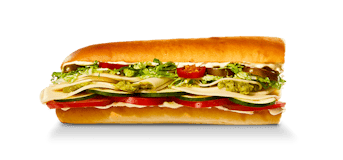
The 8-inch Veggie has 663 calories, with 27 grams of protein and 39 grams of total fat, in the figures used by this site. Its Little John entry has 336 calories; its 16-inch entry has 1,326. The word “Veggie” identifies the product. It does not tell you its portion size or where its calorie count will fall beside another sandwich.
That is worth separating from the reason you choose it. You may prefer this sandwich, want a particular flavor or be comparing options without meat. A nutrition comparison can describe the listed servings without deciding whether any of those reasons is the right one. Start with the actual order you are considering, then use the figures to answer a specific question.
What changes with the serving
The three source entries give you a practical size comparison. The Little John record is a smaller supplied serving with its own figures. The 8-inch and 16-inch records describe their respective sandwiches. Although the larger calorie figure happens to be twice the regular one here, that does not make every nutrient an exact multiple.
| Veggie serving | Calories | Protein | Total fat |
|---|---|---|---|
| Little John | 336 | 14 g | 20 g |
| 8-inch | 663 | 27 g | 39 g |
| 16-inch | 1,326 | 54 g | 79 g |
For example, the 16-inch record lists 79 grams of fat, while doubling the regular entry’s 39 grams gives 78. Keep the supplied larger record intact. A near-proportional calorie count is not evidence that you should rebuild the rest of its nutrition fields yourself or correct the table to make the arithmetic look tidier.
For a straight size comparison, leave the rest of the meal out temporarily. Once you choose a serving, bring back your actual side and drink. This keeps a decision about sandwich size from getting muddled with a separate decision about what accompanies it. The smaller sandwich and the smaller complete order are not necessarily the same choice.
Comparing it with the Turkey Tom
At the listed 8-inch size, the Turkey Tom has 471 calories, 24 grams of protein and 20 grams of fat. Against those figures, the Veggie has 192 more calories, 3 more grams of protein and 19 more grams of fat. Those differences describe this pair of source records, rather than a general rule about sandwiches with or without meat.
There is no need to explain away the comparison by guessing which ingredient contributes every gram. The catalogue gives complete sandwich totals, but it does not provide a verified subtraction for every possible preparation change. The useful conclusion is narrower: if these are the two specific servings you are deciding between, their listed calories differ by that amount.
The Slim 6 comparison answers a different question
The 8-inch Slim 6 is named Provolone in the source catalogue. It has 576 calories, 30 grams of protein and 20 grams of total fat. Compared with the regular Veggie, it lists 87 fewer calories and 3 more grams of protein. That can be a useful comparison if you are genuinely considering both named sandwiches.
It is not a recipe for converting one into the other. A plain-category sandwich and a prepared Original are separate products in the data, even when they have the same listed length. Subtracting their totals does not identify the calories in the vegetables, a spread or any single ingredient. It only identifies the difference between the two complete records.
If the product names are the confusing part, the menu directory gives you the categories and their calculator links. Check the description attached to the item you intend to order at the restaurant, particularly if you need a preparation detail that is absent here. A familiar sandwich number can help you find a product, but it should not replace the full name.
Read the nutrient you actually want to compare
Calories and protein are not the only fields available. The regular Veggie record also lists 49 grams of carbohydrates, 4 grams of fiber and 1,255 milligrams of sodium. These describe different aspects of the same serving. A protein figure is not a summary of the sodium field, and a calorie comparison cannot tell you whether the fiber totals are the same.
The distinction between total fat and saturated fat matters when reading the table as well. The regular Veggie entry lists 39 grams of total fat and 15 grams of saturated fat. The saturated fat figure is part of the total fat field; it is not another amount to add on top. The full nutrition table keeps these columns and their units separate.
Keep special requests and ingredient needs separate
Removing or changing something in a sandwich may change its nutrition, but the standard Veggie record does not tell us the exact amount of that change. A separately listed side portion also is not automatically the same quantity as an ingredient inside the sandwich. Without matching preparation information, a precise-looking deduction would be less useful than an honestly labeled standard comparison.
The name also cannot establish allergy safety or whether the sandwich meets a particular dietary requirement. For an ingredient restriction, check the restaurant’s current ingredient and allergen information for the exact preparation. Nutrition totals describe the listed serving; they do not inspect the food, its ingredients or the preparation area on your behalf.
When you are ready to add up lunch, start with the 8-inch Veggie serving and confirm that it is the size you mean. Add your extras as separate items and review their quantities. You will have an order estimate tied to named servings, with any special preparation questions still visible rather than buried inside an invented total.